5/10/2026
Best Baby Food for 6 Months in India: A Parent's Complete Guide
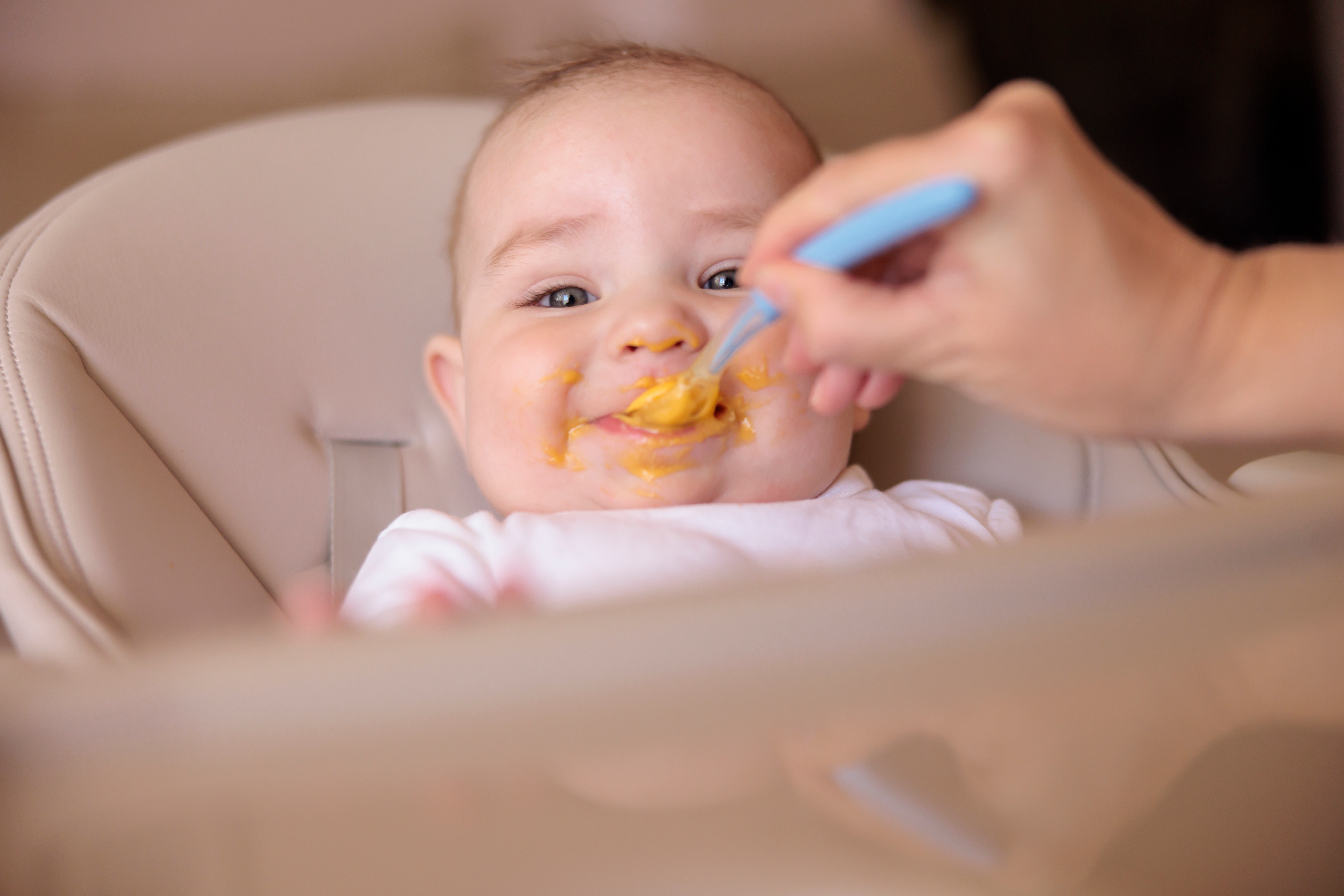
The day your baby turns six months old, something shifts. Your pediatrician says it is time to start solids. Your mother-in-law has opinions. The internet has ten contradicting articles. And your baby is sitting there, watching you eat, looking extremely curious.
It is one of the most exciting milestones in your baby’s first year — and one of the most overwhelming.
This guide cuts through the noise. You will learn exactly when to start solids for your baby in India, which traditional Indian first foods work best, what to look for in packaged baby food, and how to introduce new textures safely. Everything here is grounded in guidance from the WHO and the Indian Academy of Pediatrics (IAP).
When Do Indian Babies Start Solids? What the Guidelines Say
The answer is clear and consistent: six months, not before.
The World Health Organisation (WHO) recommends exclusive breastfeeding for the first six months of life. After that, complementary foods should be introduced while breastfeeding continues. The Indian Academy of Pediatrics (IAP) follows the same guidance.
Why six months specifically?
- Before six months, a baby’s gut lining is not yet mature enough to handle solid food
- The digestive enzymes needed to process grains and proteins are not fully active before this point
- Starting too early increases the risk of allergies, digestive problems, and choking
- Starting too late (after seven months) can lead to iron deficiency and delayed oral motor development
Signs your baby is ready for solids — all three should be present:
- Can sit up with minimal support and hold their head steady
- Shows interest in food (watches you eat, reaches toward food)
- Has lost the tongue-thrust reflex (does not automatically push food out of their mouth)
Do not rush this milestone. And do not delay it either. Six months is the window — and it is backed by decades of paediatric research.
For more on timing and signs of readiness, see WHO’s infant and young child feeding guidance.
Traditional Indian First Foods for 6 Months
When to start solids is one question. What to start with is another.
The good news: Indian cuisine has always had an answer. Long before packaged baby food existed, Indian families were preparing simple, nourishing first foods from ingredients found in every kitchen. These foods are gentle on developing digestive systems and rich in the nutrients six-month-olds actually need.
The best traditional Indian first foods for babies at 6 months:
- Rice porridge (kanji or ganji): Soft, easy to digest, and low in allergens. Rice is the gentlest grain for new eaters. Cook it very thin — almost liquid — for first feeds.
- Moong dal water or moong dal khichdi: Moong dal is the mildest lentil. It provides plant protein without overwhelming a new gut.
- Mashed banana: Naturally sweet, soft, and rich in potassium and fibre. Serve at room temperature, mashed very smooth.
- Mashed sweet potato: Packed with beta-carotene and easy to puree to a smooth consistency.
- Rice and dal khichdi: The classic Indian combination. Rice provides energy; dal provides protein. Together, they form a near-complete amino acid profile.
What to avoid in the first few months:
- Honey (risk of botulism before 12 months)
- Cow’s milk as a main drink (gut is not ready; breast milk or formula remains the primary nutrition source)
- Salt and sugar — their kidneys cannot process excess sodium, and added sugar sets up unhealthy preferences early
- Whole nuts (choking hazard)
- Highly spiced food
Start with one new food at a time, three to five days apart. This way, if there is a reaction, you will know exactly which food caused it.
What to Look For in Packaged Baby Food for 6 Months India
Life is busy. Working parents often need a reliable packaged option alongside home cooking. The market has grown — there are many options now. But not all of them are created equal.
Here is what to check on every label before you buy baby food for your 6-month-old:
Check the ingredient list first.
Ingredients are listed by weight, highest to lowest. If the first ingredient is a recognisable whole food (rice, oats, a grain, a lentil), that is a good sign. If the list is long and filled with names you cannot pronounce, that is a warning sign.
Look at the added sugar figure.
Babies do not need added sugar. None. Their taste buds are forming right now — what they eat at six months shapes their preferences for years. Look specifically for “added sugars” on the nutrition label. It should be zero, or as close to zero as possible.
Check for preservatives, artificial colours, and flavours.
A good baby food should not need any of these. If the ingredient list includes things like sodium benzoate, artificial flavouring, or food colours, put it back.
Verify FSSAI licensing.
In India, any packaged food product — including baby food — must carry an FSSAI licence number. If it is not there, do not buy it.
Consider cooking requirement as a positive.
Instant, no-cook baby cereals are ultra-processed by definition. A product that requires you to cook it with water means it has not been pre-processed to the point where it needs no heat. That is a feature, not an inconvenience.
How to Introduce Solids Safely: Textures, Timing, and Progression
Starting solids is a process, not a single event. Here is how to do it safely.
Week 1–2: Single-ingredient purees
Start with one food, one ingredient, very smooth. One feed per day, a small amount — two to three teaspoons is plenty. You are introducing the concept of food, not replacing a milk feed.
Week 3–4: More variety, same texture
Once your baby has tried several foods without reaction, begin combining them. Rice and moong dal together. Sweet potato and banana. Keep the texture smooth but start to make it slightly thicker.
Month 2 of solids (7–8 months): Mashed textures
Move from smooth purees to mashed foods with small lumps. Increase to two feeds a day. Let your baby touch and play with food — messy meals build important sensory connections.
Month 3–4 of solids (8–10 months): Soft finger foods
Small, soft pieces your baby can pick up. Banana, soft-cooked carrot, small bits of idli. This is when oral motor skills develop rapidly.
General rules that apply throughout:
- Always offer breast milk or formula before solids, not after (milk remains the primary nutrition source until 12 months)
- Never force-feed — a baby turning away or closing their mouth is communicating clearly
- Always supervise during meals
- Avoid distractions (screens, loud noise) during feeding so your baby learns to pay attention to hunger and fullness cues
- Introduce allergenic foods (eggs, fish, nuts) one at a time, not all at once, and ideally with your pediatrician’s guidance
Why Traditional Recipes Work — and How UGGU Makes Them Convenient
The traditional Indian approach to weaning — rice, dal, and gentle spices like ajwain and cumin — was not invented by nutritionists. It was developed over generations by families who observed what worked. And modern nutrition science has largely confirmed why it works:
- Rice is the lowest-allergen grain for infants
- Moong and toor dal provide plant protein for organ and muscle development
- Ajwain (carom seeds) and cumin are traditionally used to ease infant digestion and reduce colic
- Ghee adds healthy fats that support brain development
The problem is time. Preparing a proper rice and dal porridge from scratch — soaking, grinding, cooking low and slow — takes 45 minutes to an hour. That is not realistic for a working mother doing a morning feed at 6 AM.
This is exactly why UGGU was created.
UGGU’s 6-12M variant contains seven clean ingredients: rice, mung bean, toor dal, almonds, cashews, carom seeds, and cumin. No added sugar (zero grams, independently lab-verified by NABL-accredited Equinox Labs). No added salt. No preservatives. No artificial anything.
It is the traditional Telugu recipe for infant porridge — the one that has been made in Indian households for generations — made available in a form that a working parent can cook in fifteen minutes on a weekday morning.
UGGU requires cooking (it is not an instant mix), which means it is not ultra-processed. You add water, stir, cook on a low flame, and serve warm. One scoop for a six-month-old.
For more reading on healthy baby food India, visit the UGGU blog.
Frequently Asked Questions
When should I start solids for my baby in India?
At six months of age, not before. Both the WHO and the Indian Academy of Pediatrics recommend exclusive breastfeeding for the first six months, followed by the introduction of complementary foods. Look for three readiness signs: head control, interest in food, and loss of the tongue-thrust reflex.
What is the best first food for a 6 month old baby?
Single-ingredient, smooth purees work best as first foods. Good options include rice porridge (kanji), mashed banana, mashed sweet potato, and moong dal water. Start with one food at a time, three to five days apart, to watch for any reactions.
Is rice porridge good for a 6 month baby?
Yes. Rice is one of the gentlest grains for infants — low in allergens, easy to digest, and familiar in most Indian households. Thin rice porridge (a liquid consistency for the first few weeks) is an excellent starting food. As your baby grows, you can thicken it and add moong dal for protein.
What Indian baby food is best for 6 months?
Look for products made from recognisable whole ingredients — rice, lentils, and traditional spices like ajwain and cumin. Zero added sugar is non-negotiable. Verify FSSAI licensing and check that the product has been independently tested for safety. UGGU’s 6-12M variant meets all of these criteria and is made from a seven-ingredient traditional recipe.
What should I look for in any commercial baby food I buy?
Four things: a clean, short ingredient list starting with a whole food; zero added sugars (check the nutrition label specifically for “added sugars,” not just “total sugars”); no preservatives or artificial colours; and a valid FSSAI licence number on the pack. Products that require cooking rather than instant mixing are generally less processed, which is a good sign.
Ready to Start Solids the Traditional Way?
Introducing baby food at 6 months in India does not have to be complicated. Start with simple, single-ingredient foods. Follow your baby’s cues. Introduce variety gradually. And trust that the traditional Indian approach to weaning — rice, dal, gentle spices — has been tested by generations of families before you.
If you are looking for a packaged option that does not cut corners on ingredients or safety, try the UGGU 6-12M variant. Seven clean ingredients. Zero added sugar. The traditional recipe, made convenient.
Your baby’s first bites are the beginning of a lifelong relationship with food. Start them well.