8/5/2026
Ragi for Babies: When to Introduce & How to Prepare It
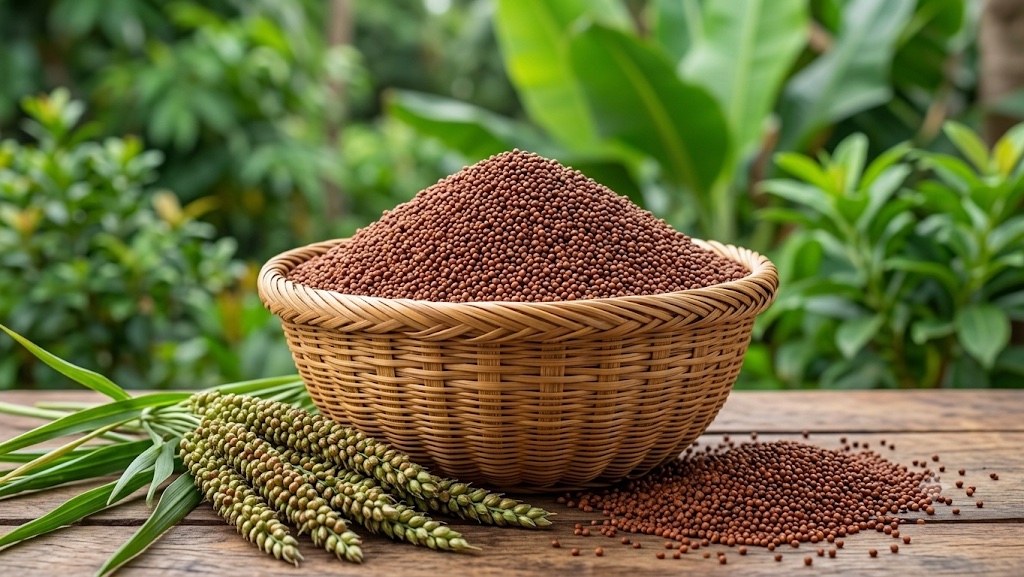
You have just started your baby on solids. Someone — your mother, your paediatrician, a friend from the mother’s group — says: “Have you tried ragi yet?”
And suddenly ragi is everywhere. Ragi ladoos in the kitchen. Ragi porridge videos on Instagram. Ragi flour at the kirana store. Everyone seems to agree it is wonderful for babies. But nobody quite explains when to actually start it, or why it might be worth waiting a little longer than you think.
This guide covers everything you need to know about ragi for babies — what it is, when Indian families traditionally introduced it, how to prepare it, and what to look for if you buy a ragi-based baby food.
What Is Ragi? India’s Original Superfood for Growing Children
Ragi is finger millet. It is a small, reddish-brown grain that has been grown and eaten across India — particularly in Karnataka, Andhra Pradesh, Telangana, and Tamil Nadu — for thousands of years.
It is not a new wellness trend. Ragi is one of the oldest cultivated grains in South Asia. Generations of Indian children grew up on ragi porridge, ragi mudde, and ragi roti. Before fortified packaged cereals existed, ragi was what grandmothers reached for when a child needed to grow strong.
What makes ragi stand out among grains:
- It is one of the richest plant sources of calcium — important for bone development in growing babies and toddlers
- It contains iron, which supports healthy blood development
- It is naturally gluten-free, making it easier on developing digestive systems than wheat
- It is high in dietary fibre, which supports gut health
- It has a good amino acid profile for a grain, particularly the essential amino acid methionine
For a grain that has been part of Indian diets for centuries, the nutritional case for ragi is well established. The question is not whether ragi is good for babies. It is: when is the right time to introduce it?
When to Introduce Ragi to Your Baby — and Why Timing Matters
Here is the part that surprises many parents: ragi is not an ideal first food for babies at six months.
Most paediatricians and nutritionists in India recommend starting solids at six months, beginning with gentler, easier-to-digest grains. Rice is the standard first grain — and for good reason. It is low in allergens, light on the gut, and simple to prepare to the thin, liquid consistency a new eater needs.
Ragi, like most millets, is a more complex grain. Millets contain higher fibre and compounds that can be harder on a developing gut. They are nourishing and excellent — but they work best once a baby’s digestive system has had several months to mature and adapt to solids.
This is why the traditional Indian weaning sequence typically followed a logical order: rice and dal first, then millets as the baby grew older and their gut became more capable.
The WHO recommends starting with simple, easily digestible foods and gradually introducing more complex grains and textures. The Indian Academy of Pediatrics echoes this: complementary feeding should progress from simple to varied as the child develops.
For most babies, 12 months onwards is a sensible point to introduce ragi — by which time:
- The gut has been on solids for six months and has adapted significantly
- The baby can handle thicker textures and more complex flavours
- The kidneys and digestive system are mature enough for a broader range of foods
- The baby is moving toward family foods, and millets fit naturally into that expansion
If you are just beginning solids and your baby is around six months, start with rice and dal first. Build the foundation. Ragi will follow — and it will be worth the wait.
How to Prepare Ragi Porridge for Your Baby (Step by Step)
Once your baby is 12 months or older, ragi porridge is simple to make at home.
What you need:
- Ragi flour (or whole ragi, soaked and ground) — 2 tablespoons
- Water — 1 cup (approximately)
- A small pinch of ghee to serve
Method:
- Mix the ragi flour in a small amount of cold water first to remove lumps. Stir until you have a smooth paste.
- Add the remaining water and place on a low flame.
- Stir continuously — ragi thickens quickly and can stick to the pan if left unattended.
- Cook for 8 to 10 minutes on low heat, stirring throughout, until the porridge is thick and fully cooked.
- Let it cool to a warm, comfortable temperature. Test on your wrist before feeding.
- Finish with a small amount of ghee before serving. This adds healthy fats and makes it more palatable.
Consistency guide:
- At 12 months: medium-thick, spoonable
- At 15 months+: thicker; your toddler can manage more texture
Flavour additions (once your baby is comfortable with ragi):
- A pinch of cinnamon
- Mashed banana stirred in
- A little jaggery for older toddlers (not for babies under 12 months)
Do not add sugar or salt for babies under 12 months. Their palates do not need it, and their kidneys are still developing.
What to Look For in Any Ragi Baby Food You Buy
If you prefer the convenience of a packaged ragi option — which many working parents reasonably do — here is what to check before you buy.
Read the ingredient list carefully. Ragi should appear as a named, recognisable ingredient. The list should be short. If it is long and filled with names you cannot identify, that is worth a pause.
Check added sugar — specifically. Babies and toddlers do not need added sugar in their food. Look at the nutrition label and find “added sugars” — not just total sugars. It should be zero, or as close as possible.
Look for preservatives, artificial colours, and flavours. A wholesome ragi food does not need any of these. If you see terms like artificial flavouring, food colours, or sodium benzoate on the label, put it back.
Confirm FSSAI licensing. Any packaged baby food sold in India must carry an FSSAI licence number. If it is absent, do not buy it.
Check whether it requires cooking. Products that need to be cooked with water are generally less processed than instant-mix variants. Cooking requirement is a sign that the food has not been pre-gelatinised or over-processed to achieve shelf stability.
How UGGU 12+M Introduces Ragi — Alongside Jowar and Bajra
UGGU’s 12+M variant brings in ragi as part of the traditional Indian millet trio: Raagi, Jowar (sorghum), and Bajra (pearl millet). These three millets were commonly combined in South Indian weaning foods because together they offer a broader range of nutrients than any one millet alone.
The 12+M formula contains 16 clean ingredients: Rice, Raagi, Jowar, Bajra, Mung Bean, Toor Dal, Chana Dal, Urad Dal, Wheat, Almonds, Cashews, Peanuts, Carom Seeds, Cumin, Black Pepper, and Dry Ginger.
No added sugar — verified at zero grams by an independent NABL-accredited lab. No added salt. No preservatives. No milk or milk derivatives. FSSAI licensed.
It is designed for 12 to 24 months — the exact window when ragi, jowar, and bajra are appropriate to introduce. The rice base remains, giving the gut something familiar to anchor to, while the millets bring in their natural nutrition.
Like the 6-12M variant, UGGU 12+M requires cooking — it is not an instant mix. Add water, stir, cook on low for 10 to 15 minutes. Finish with ghee. Serve warm.
Explore UGGU 12+M at littlediet.in.
Frequently Asked Questions
At what age can I give ragi to my baby?
Most nutritionists and paediatricians recommend waiting until 12 months before introducing ragi. Rice is a gentler starting grain for babies at six months. Ragi, as a millet, is best introduced once the digestive system has matured through several months on solids. Always discuss timing with your child’s paediatrician.
Is ragi good for babies?
Yes — ragi is nutritious and has been fed to Indian children for generations. It is a natural source of calcium, contains iron and fibre, and is gluten-free. The key is introducing it at the right age, typically after 12 months, once the gut is ready for it.
Can I give ragi to a 6 month old baby?
It is generally better to start with rice at six months. Rice is the gentlest first grain — easy to digest and low in allergens. Once your baby has been on solids for several months and is around 12 months old, ragi is an excellent food to add.
How do I make ragi porridge for babies?
Mix ragi flour with cold water to a smooth paste. Add more water, cook on low heat while stirring continuously for 8 to 10 minutes until thick. Cool, add a small amount of ghee, and serve warm. Do not add sugar or salt for babies under 12 months.
What should I look for in packaged ragi baby food?
Look for a short ingredient list with ragi as a named ingredient, zero added sugars on the nutrition label, no preservatives or artificial colours, and a valid FSSAI licence number. A product that requires cooking is generally preferable to an instant-mix variant.
The Right Grain at the Right Time
Ragi is a remarkable food. Indian families have known this for generations. But like most good things, timing matters.
Start your baby on rice and dal at six months. Let the gut adapt. Build familiarity with solids. Then, as your child approaches 12 months and begins moving toward family foods, ragi fits naturally into the picture.
That is exactly how UGGU is designed — rice and lentils first (6-12M), then the full millet trio including ragi once your baby is ready (12+M).
Visit littlediet.in to learn more about both variants and find the one that fits your baby’s stage.